If the dovetail is the showpiece, the mortise and tenon is the quiet workhorse. It joins a rail to a leg, a door stile to a rail, an apron to a table — anywhere two pieces meet at a right angle and need to resist twisting. A tenon (a tongue) fits into a mortise (a matching hole), giving a large long-grain glue surface and a mechanical shoulder that keeps the frame square.
Sizing the joint
A common starting proportion is the "rule of thirds": make the tenon roughly one-third the thickness of the stock so the mortise walls and the tenon are balanced in strength. On 19 mm (3/4 inch) material that puts the tenon near 6 mm. Adjust to the chisel widths you actually own, because the mortise width is easiest to chop with a chisel that matches it exactly.
Mark the mortise first
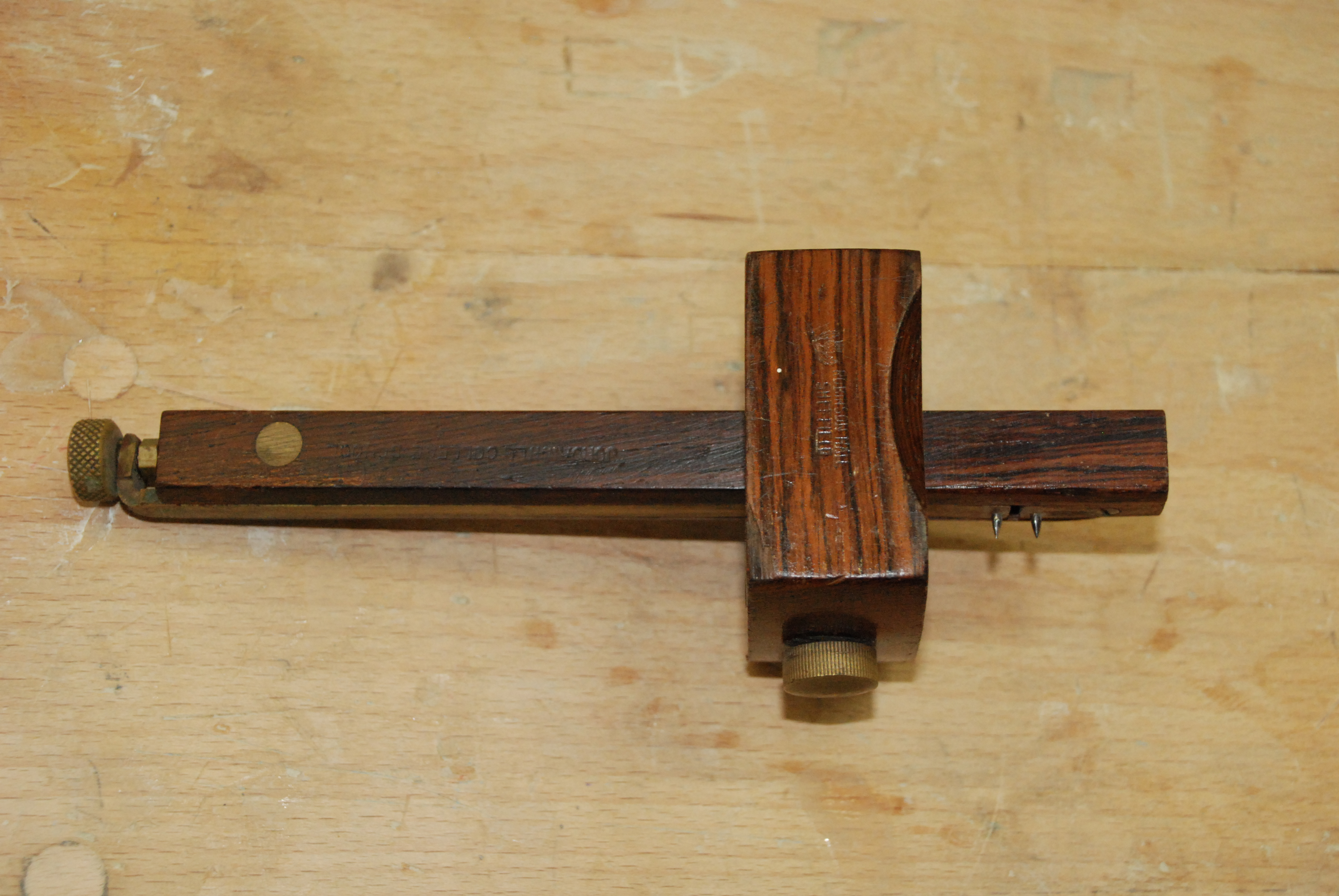
Set a mortise gauge — the tool with twin pins — to your chisel width and scribe both walls of the mortise in one pass. Mark the mortise on the leg before the tenon on the rail, then size the tenon to the mortise you actually cut. Working in that order keeps small errors from stacking up.
- Lay out the mortise. Scribe the two long walls with a mortise gauge and square the ends across with a knife.
- Chop the mortise. Work from the centre outward with a chisel held bevel toward the waste, levering out chips and deepening in stages.
- Mark the tenon. Use the same gauge setting on the rail so the tenon cheeks match the mortise walls exactly.
- Saw the cheeks and shoulders. Cut the long cheeks first, then the shoulders, staying on the waste side of every line.
- Test and pare. Dry-fit, find the tight spots, and pare the cheeks until the tenon enters with firm hand pressure.
- Square the shoulder. A clean shoulder is what hides the joint and keeps the frame from racking. Pare it true before glue-up.
Why this joint suits Canadian seasons
Frame-and-panel construction is built on the mortise and tenon: a solid panel sits in a groove inside a mortised-and-tenoned frame, free to expand and contract as indoor humidity rises in summer and drops with winter heating. Because the panel floats rather than being glued solid, the assembly can move through the seasons without splitting. This is why so many cabinet doors and tabletops across the country still use the joint.
Practical detail
Glue only the tenon, never the floating panel inside a frame. Gluing the panel locks it and invites cracks when the wood shrinks in dry winter air.
Drawboring for extra hold
Before modern adhesives, joiners pinned mortise-and-tenon joints with a wooden peg through an offset hole, drawing the shoulder tight. A drawbored joint can hold even with minimal glue, which is part of why antique frames stay together. It is an optional but rewarding next step once the basic joint is reliable.